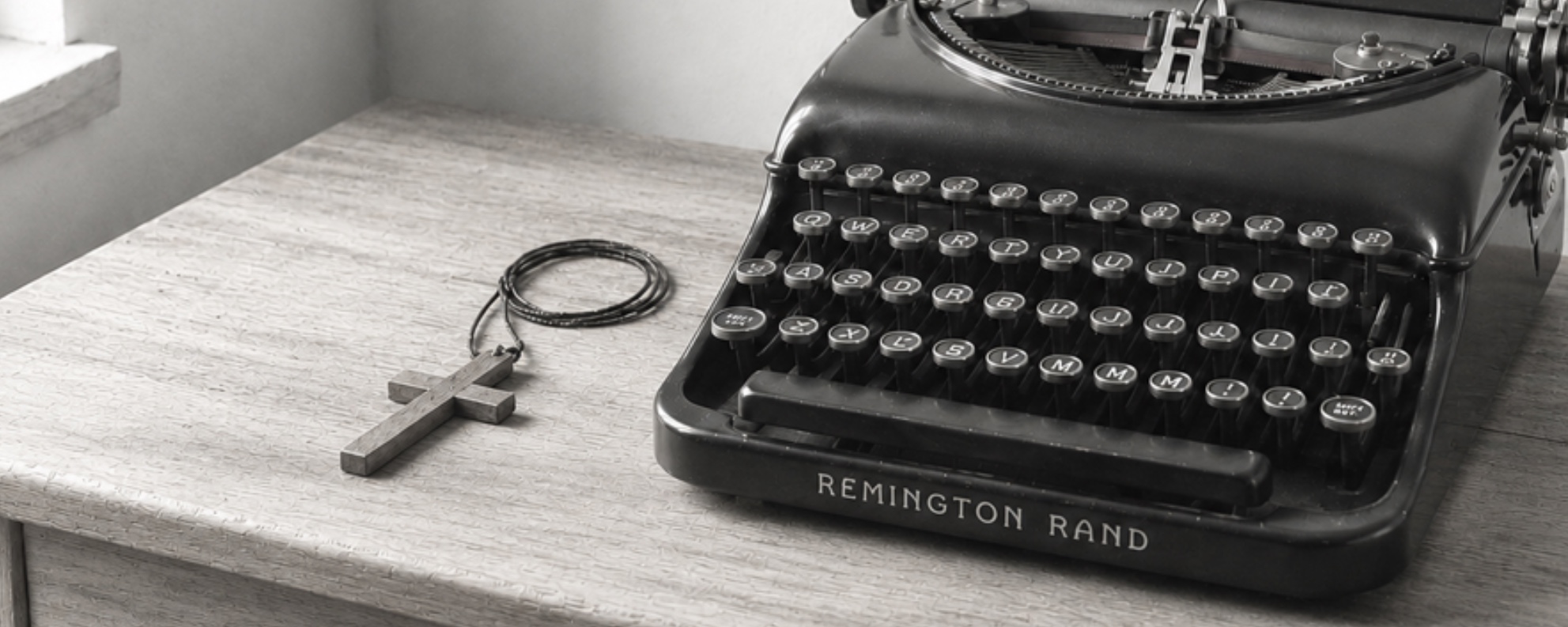
It took me years to recognise how much of God I had inherited through fear disguised as reverence.
Some of it came through sermons I heard that spoke of love and threat in the same breath. Some through hymns that carried both comfort and warning. Some through silence — expectations nobody questioned because they had been there so long.
God was spoken of as loving. Yet beneath that language sat a quieter story. A story where someone had to be punished before forgiveness could be released. A story where innocence could be exchanged for guilt. A story where violence could be called justice if it was wrapped in holy language.
And I carried that theology into hospital rooms. Into funerals. Into prayers spoken when words already felt too heavy to hold.
For a long time, I believed faith meant learning how to live inside that tension.
Then scripture began to dismantle what I thought I knew.
The prophets spoke of mercy interrupting punishment. Jesus kept walking toward the condemned, the excluded, the ones religion had already decided were expendable. Forgiveness kept appearing before punishment finished speaking.
I began to see the cross less as something arranged by God, and more as something exposed by God.
The cross is exposed as a place where scapegoating becomes visible. The cross is where systems decide survival requires someone else to carry the cost. It is exposed as the place where religion and power discover how easily they can cooperate when love becomes dangerous.
And God remains inside those moments, because God does not rescue from a distance nor does God step back from our difficult and traumatic experiences. Through Christ and in the Spirit, God remains.
The cross reveals how deeply humanity fears losing control. And how far systems will go to protect themselves from compassion. It reveals how easily violence can be baptised when people believe survival depends on it.
And still, God remains present.
The ancient world believed survival required offering the gods something precious enough to hold chaos back. Yet we see from the story of Abraham that God already moves toward interruption, toward mercy, toward refusal of blood as currency.
In the wilderness, healing comes when people face what is killing them instead of pretending it is not there.
Jesus enters that same pattern.
Lifted up.
Violence exposed.
Love refusing to disappear.
The cross becomes both mirror and revelation.
A mirror showing humanity its capacity for harm.
A revelation showing humanity that it is still held inside love.
Resurrection does not remove suffering from history. Resurrection removes suffering’s claim to final authority.
And I began to understand this slowly, through years rather than arguments:
The cross reveals what humanity is capable of.
Resurrection reveals what God is committed to bringing into being.
And somewhere across those years, fear stopped defining my understanding of God.
I began to recognise God standing where humanity fractures most deeply.
And I am still learning how to say this without trembling:
Love outlives every system built on fear.
Love outlasts every structure built on violence.
Love is older than death itself.